Day 5: Refuge Plan du Lac to Refuge du Vallonbrun
Day 5: Refuge Plan du Lac to Refuge du Vallonbrun
Thursday 13 August 2026, 18.5km, 720m up, 810m down
According to the Cicerone guidebook, today’s route to Refuge du Vallonbrun would take about 6 1/2 hours with about the same amount of ascent as descent over the 18.5 km. We were told to expect a profusion of colour from the carpet of wildflowers along the hillsides.
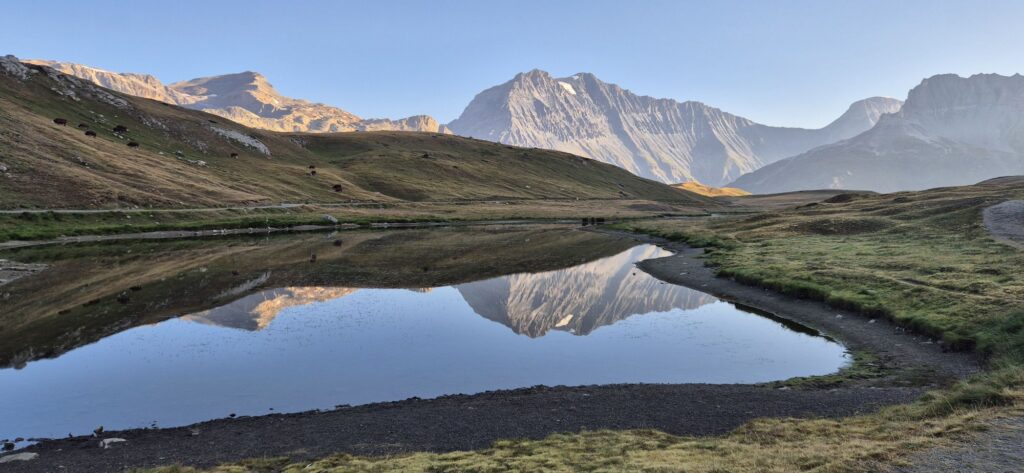
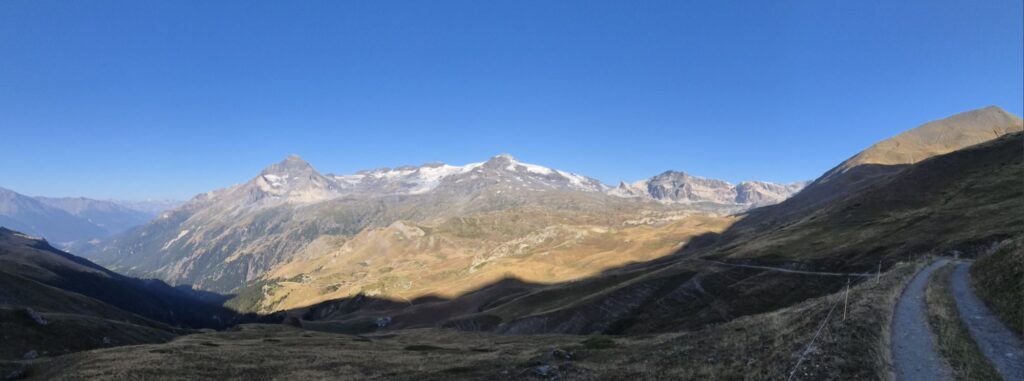
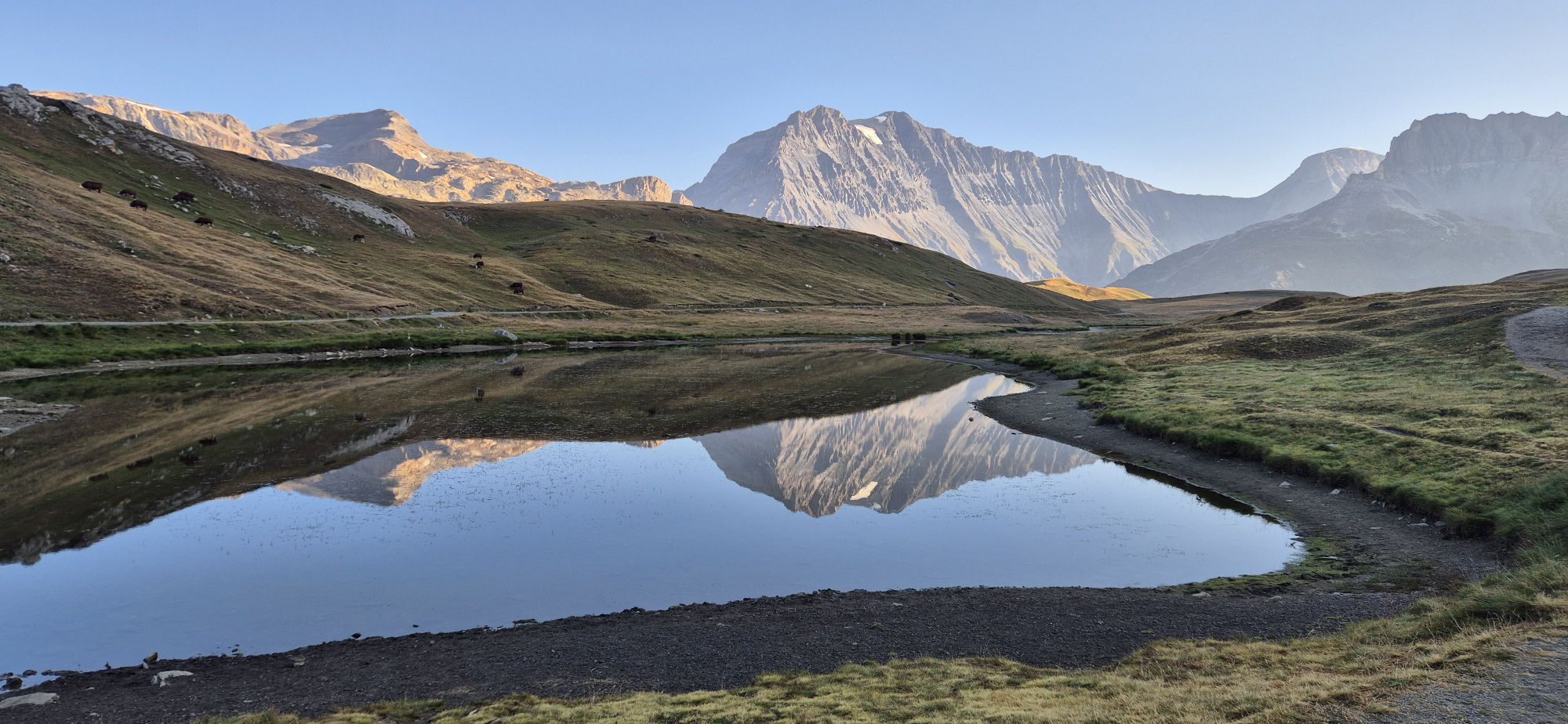
Unfortunately, the very dry and hot summer was evident in the green turning to yellow and brown of the grass, and the lack of colour save for the occasional late blooming purple flowers. As we wound around the first stretch of track, we passed a number of informative posters and learned some interesting facts:
1. Marmots hibernate for 6 months each year during which time their heart rate slows from 130 bpm to 5 bpm.
2. Marmots live in a complicated system of tunnels including separate toilet and bedroom areas.
3.You have heard that grasshoppers have ears in their legs, but did you know that locusts have the same type of hearing apparatus in their abdomens?
4. Scientists are able to extract DNA from poop to determine the health and age of the animal.
5. Dragonflies eat small insects, tadpoles and even small fish.
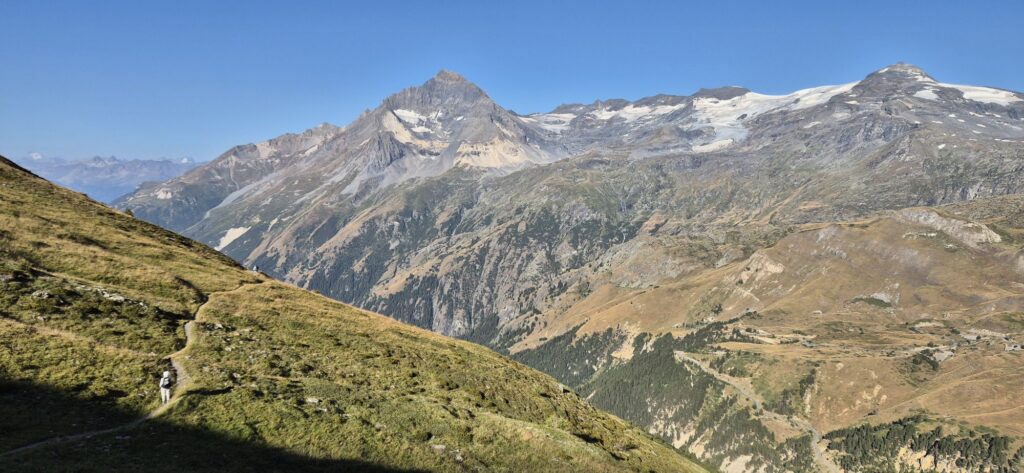
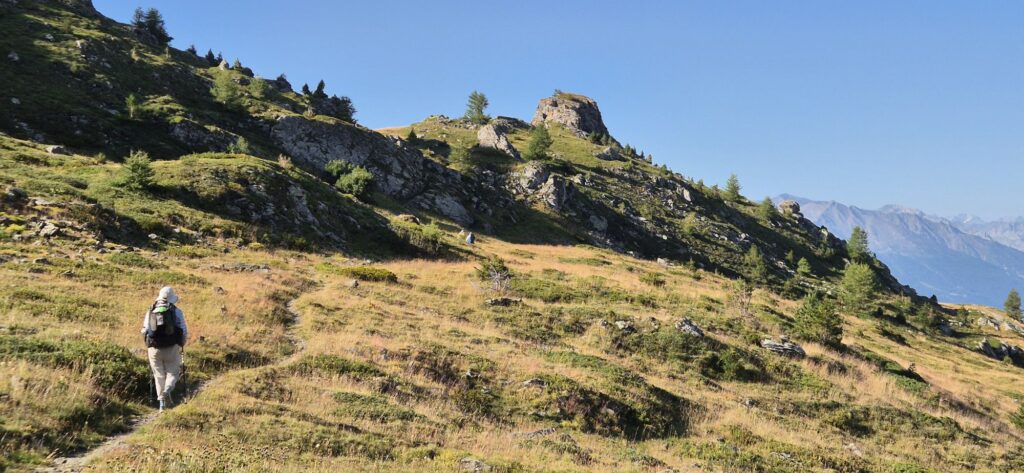
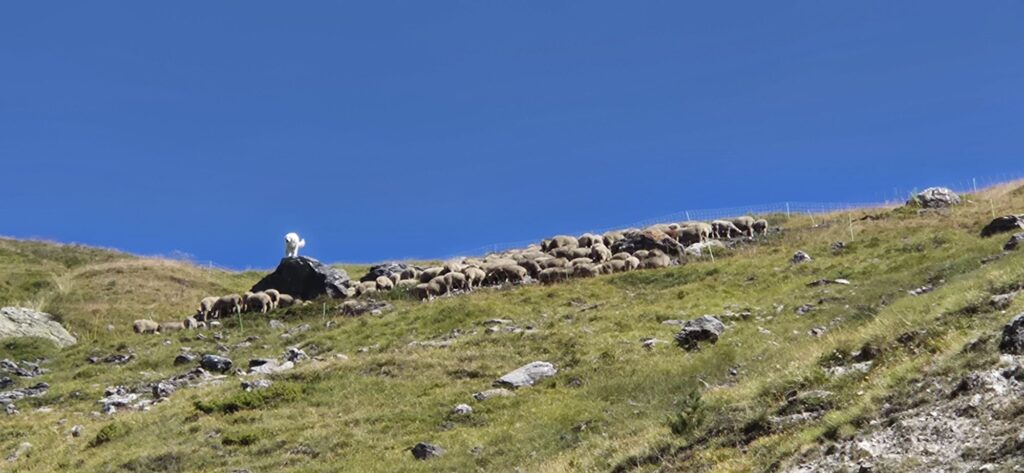
Off we continued then along a 4WD road from which we turned onto a narrow path winding around the hillsides. The only native animals we saw were marmots but we did see cows and sheep with their pastou protectors. At one turn, as we crossed a stream, we looked up at the sound of barking and saw a pastou standing on top of a rock, with his flock of sheep huddled around the base of the rock below him.
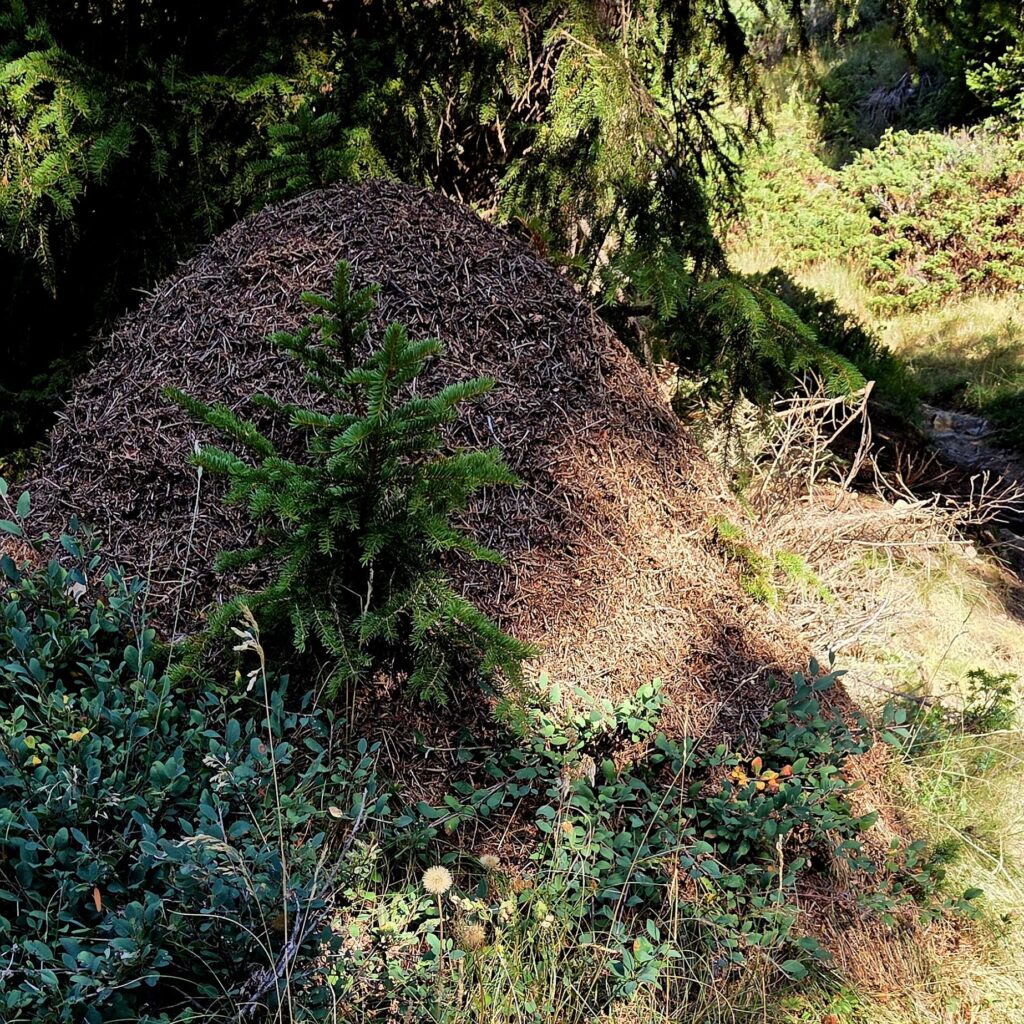
After the initial climb, we commenced a fairly steep descent and entered a lovely cool pine forest. The pine needles were soft to walk on and less slippery than the dusty gravel paths. Beside the trail there were a few massive ant nests that appeared to be constructed of the pine needles rather than soil.
Exiting the forest we turned onto another 4WD road, which we followed as it wound gently uphill. After some time we turned back onto a track which climbed much more steeply up the hillside. We could see neat little towns on the valley floor and, despite climbing higher, as we turned into another valley, a trick of the wind carried the noise of traffic to us from the roads way below.
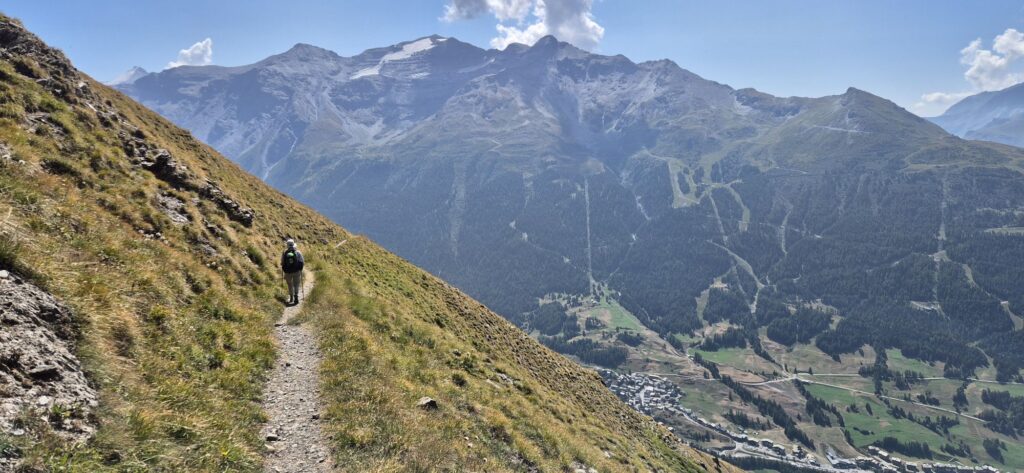
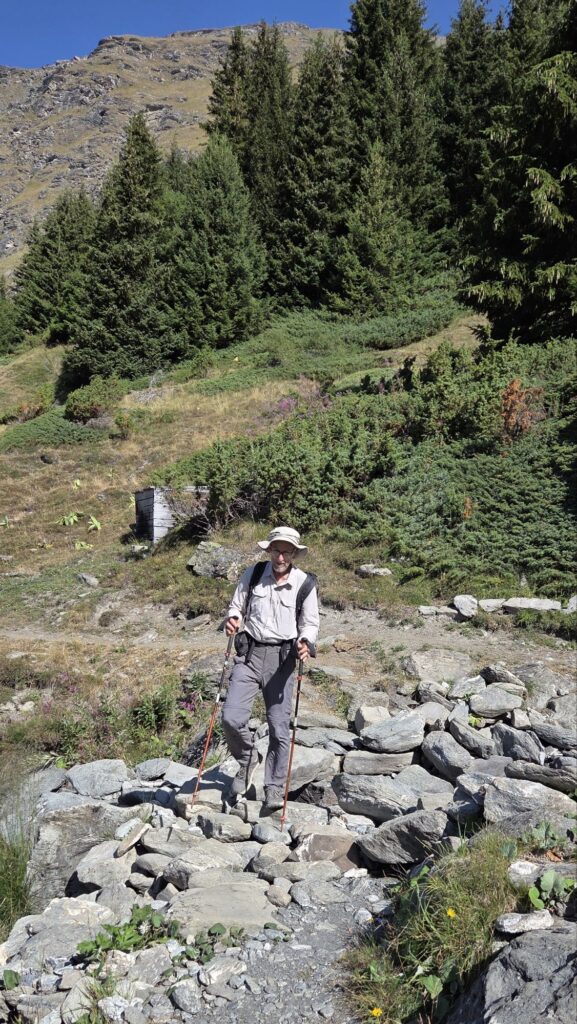
Even though we found the climb steep work, it was nowhere near as punishing as were some of the slopes we climbed early in the year on the Te Araroa. At around 11 am we passed the Refuge de Cuchet, also run by the National Parks but as an unmanned hut. We had a peek inside and noted the 2 rooms with bunks for 24 people in 1 room, the other serving as dining room and kitchen, complete with a gas burner.
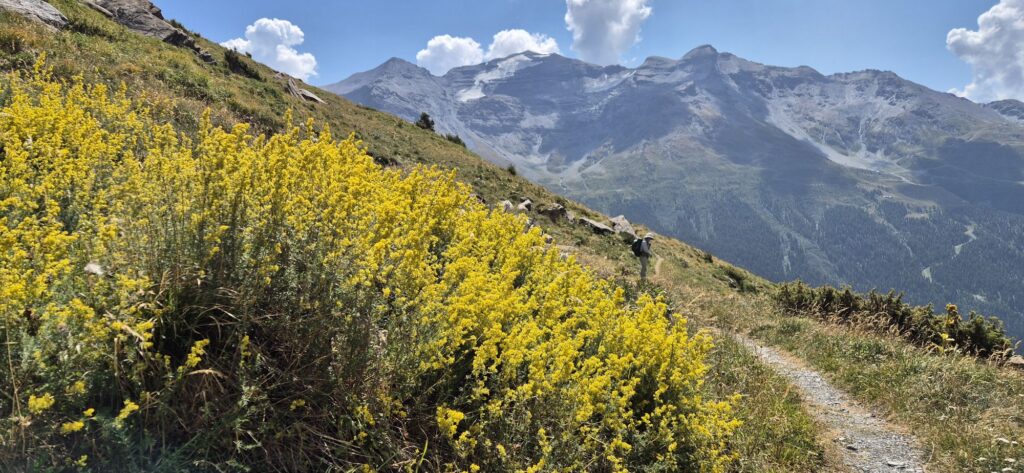
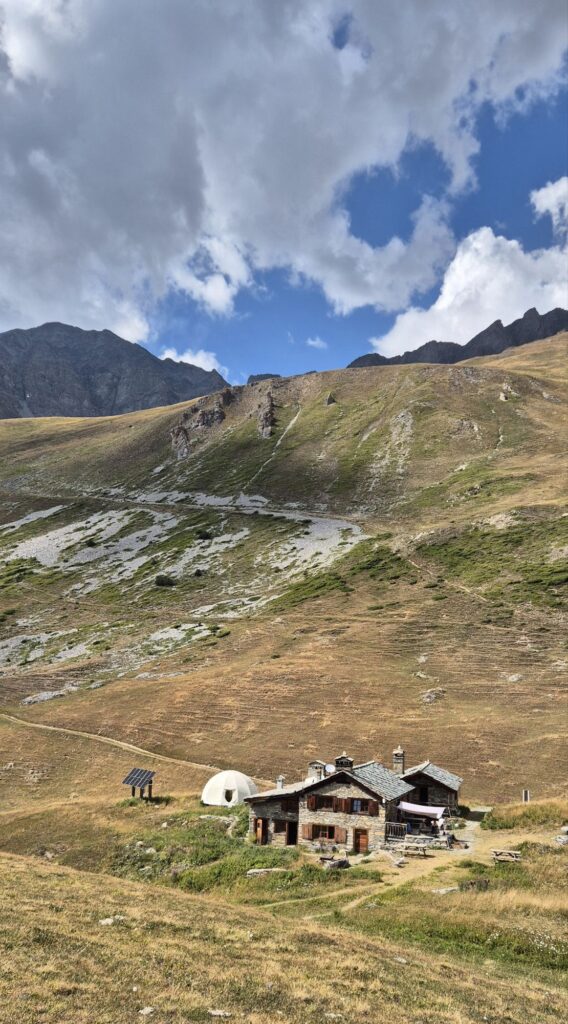
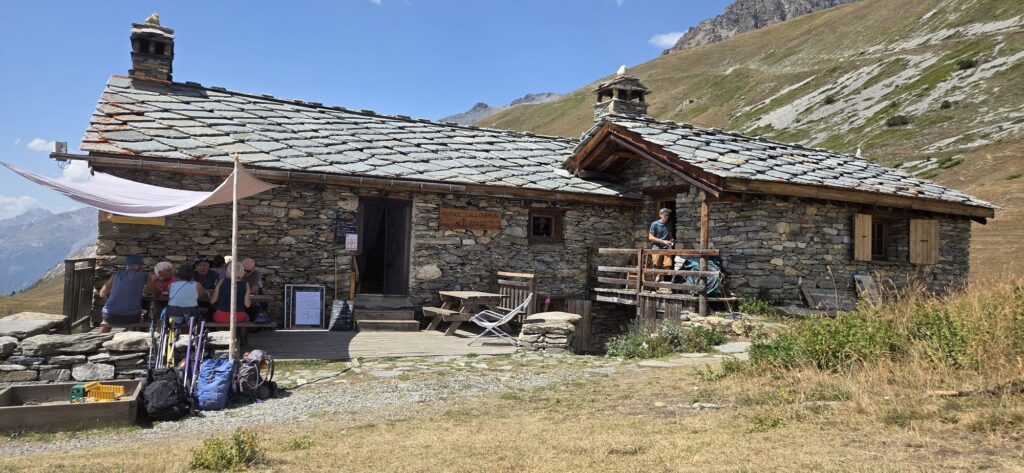
The final stage was an undulating path which always seemed to go uphill more than down, and we passed a few huts that we thought might have been our destination before we were finally spilled out onto a road where we saw the Refuge du Vallonbrun.